Recognition as Stewardship
How visible, specific appreciation helps translate values into culture

Recognition is often treated as one of the more relational dimensions of leadership—something intuitive, interpersonal, and secondary to the “real” work of managing organizations. It is easy to think of it as a thank-you note, a kind word in a meeting, or an occasional gesture of appreciation when someone exceeds expectations.
Those moments matter, but I have come to see recognition as much more than that. Done well, it is one of the clearest ways an organization communicates what it values.
In that respect, recognition has a great deal in common with effective feedback. Both are most meaningful when they are timely, specific, and connected to the work itself. In teaching, vague praise rarely helps students understand what they have done well or what is expected of them. Specific feedback identifies the habits, skills, and contributions that matter. Recognition functions similarly within organizations. When it is visible and concrete, it does more than affirm an individual—it signals to the broader community what kinds of efforts are worthy of notice.
What gets recognized, publicly and consistently, is what a community learns to value.
That is why I have tried to think about recognition not as an occasional courtesy, but as part of the deliberate work of building culture. The most meaningful recognition is specific enough to matter to the person receiving it, visible enough to communicate something to the broader community, and connected to the values the organization hopes to reinforce.
That principle shaped the way I approached faculty development and staff leadership. Each spring, graduating students wrote notes of appreciation to faculty members who had made a meaningful difference in their experience. Rather than allowing those notes to remain private—with permission—we transformed them into yard signs displayed across campus.
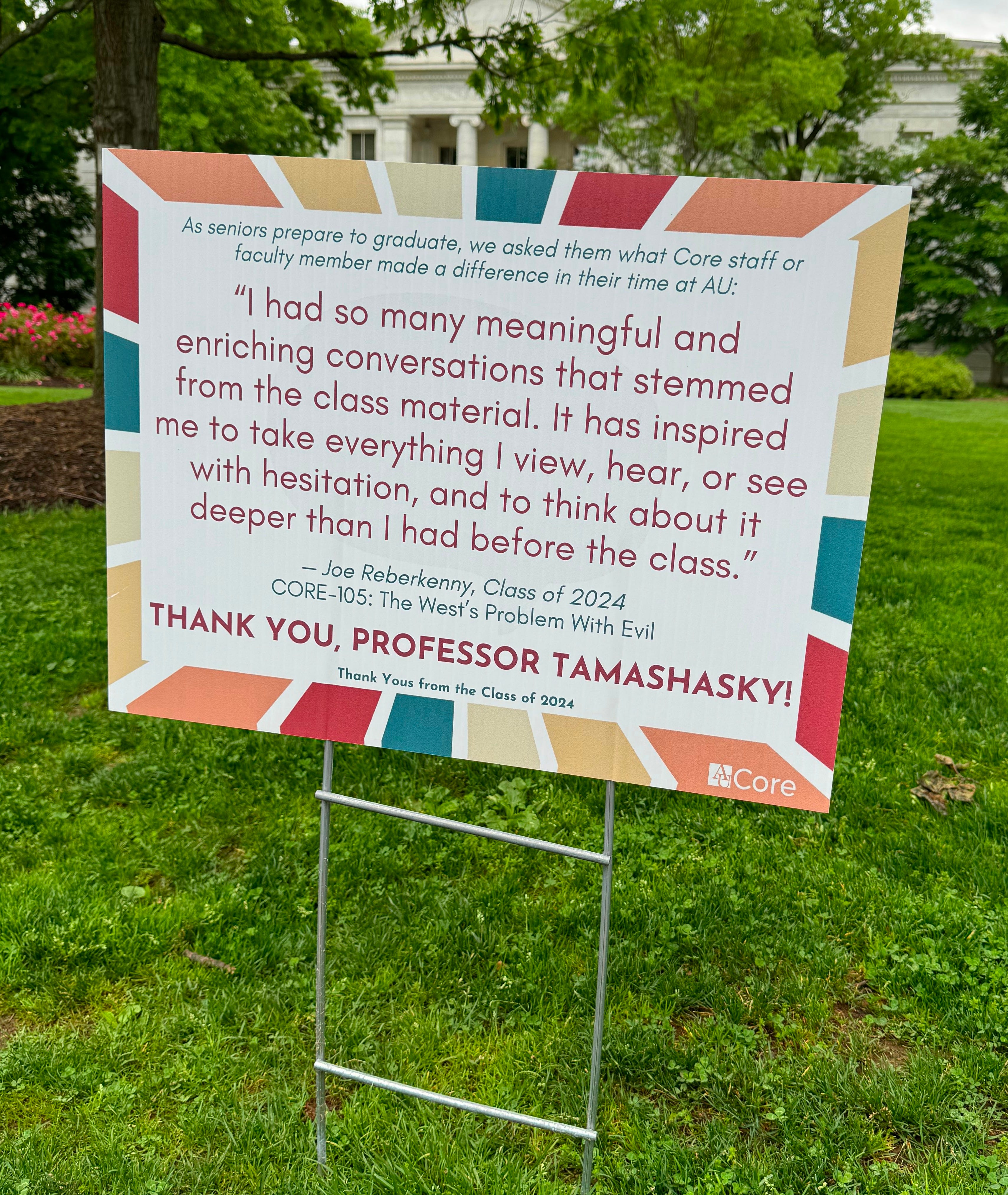
What mattered about that practice was not simply that it celebrated individual faculty members. It made institutional values visible. It communicated that mentorship, attentiveness, and care for students were central to the educational mission. Recognition, in that moment, did more than reward effort—it clarified what the institution believed mattered.
The same logic applied in smaller ways as well. When students identified a faculty member in a transition survey as someone who had made an important connection with them, I shared that recognition with the faculty member’s dean. A student’s appreciation is meaningful on its own, but when that appreciation reaches someone positioned to reinforce and reward that work, it becomes part of the institution’s broader understanding of what matters. It helps ensure that the forms of labor the institution claims to value are the ones that are actually acknowledged.
That principle also shaped how I thought about faculty service. Service work is essential to institutional functioning but often far less visible than teaching or scholarship, which means it can easily feel (and become) undervalued. When faculty contributed their time to committees and budgets allowed little in the way of compensation, I tried to offer recognition that was modest but meaningful—for example, inviting folks to select books of their choice and then sharing those selections with the wider group.
On one level, it was a simple gesture of thanks. On another, it signaled that service mattered and that continued learning was part of the shared work of the community. The recognition was personal, but it also reinforced a communal norm around contribution and intellectual generosity.
These practices may seem small. That is precisely why they matter.
Leaders often speak about values—collaboration, mentorship, innovation, care—but values become real only when they are embedded in recurring practices. Recognition is one of the ways organizations translate aspirational values into lived culture. When an institution intentionally recognizes particular forms of contribution, it tells people not only that their work matters, but what kinds of work matter most.
This is why visibility matters. Private gratitude is meaningful, but public recognition shapes communal norms by making certain forms of labor visible to others.
It is why specificity matters. Generic praise may feel pleasant, but it rarely clarifies what is being valued. Specific recognition identifies the behaviors and commitments an organization hopes to cultivate.
And it is why consistency matters. Recognition that happens only when someone remembers can feel arbitrary. But when recognition is built into routines—through feedback loops, recurring gestures, and visible practices—it becomes dependable enough to shape culture.
There can be a temptation to see that kind of routine as inauthentic, as though recognition only “counts” when it is spontaneous. I have come to think the opposite is true. Routines are what make recognition sustainable. They ensure that appreciation does not depend solely on memory, bandwidth, or emotional energy. They make it possible for recognition to be not only sincere, but consistent.
That consistency matters not only for the people being recognized, but also for the people doing the recognizing. Leaders who rely on ad hoc efforts to affirm others often find that the practice disappears under the pressure of competing demands. Structured habits of recognition reduce that burden. They create reliable ways of reinforcing values without requiring constant reinvention.
Seen this way, recognition is not merely about morale, nor is it ancillary to the work of leadership or teaching. It is part of how organizations make their values visible and durable over time.
When recognition is timely, specific, and connected to shared priorities, it becomes more than appreciation. It becomes infrastructure.